


| The Communist Party of Ireland is an all-Ireland Marxist party founded in 1933. Its aim is to win the support of the majority of the Irish people for ending the capitalist system and for building socialism—a social system in which the means of production, distribution and exchange are publicly owned and utilised for the benefit of the whole people. | Páirtí Marxach uile-Éireann a bunaíodh sa bhliain 1933 is ea Páirtí Cumannach na hÉireann. Is é aidhm an pháirtí tacaíocht thromlach mhuintir na hÉireann a bhaint amach do dheireadh a chur leis an gcóras caipitleach agus do thógáil an tsóisialachais—córas sóisialta ina bhfuil na córacha táirgthe, dáileacháin agus malairte i seilbh an phobail agus ina n-úsáidtear iad ar mhaithe leis an bpobal iomlán. |
Belfast Béal Feirste weekly seachtainiúil |
|
 |
Dublin Baile Átha Cliath monthly míosúil Archive Cartlann |
 The Irish Spark podcast |
 An Introduction to the Communist Party of Ireland (2nd edition) (PDF) |
Policies and statements Membership Cáipéisí |
 |
 Solidnet—the international solidarity network |
  
|
 |
From the January issue: Working from home is a benefit for bosses Remote working, or working from home, is not something new. It has existed and been used at different stages of capitalist development and innovation, reflecting the state of technological development at that time and the cost-benefit to profit creation. Today it’s the same factors, considerations and driving forces as before . . . Continue | Ar aghaidh |
 |
|
Mel Corry, who died on 13 January, was a lifelong trade unionist, a member of the Peadar O’Donnell Socialist Republican Forum, and a former member of the National Executive Committee of the CPI. A native of Lurgan and former textile worker, from 2008 he was a tutor with Trademark in Belfast, providing political education for trade unions. He was an inspirational teacher, who worked tirelessly in the service of his class. Ba cheardchumannaí ar feadh a shaoil é Mel Corry, a fuair bás ar 13 Eanáir. Ba bhall é d’Fhóram Poblachtach Sóisialach Pheadair Uí Dhónaill agus iarbhall de Choiste Feidhmiúcháin Náisiúnta an CPI. B’as an Lorgain dó, agus chaith sé seal mar oibrí i dtionscal na dteicstílí. Ón mbliain 2008 ba theagascóir é le Trademark i mBéal Feirste, ag cur oideachas polaitiúil ar fáil do cheardchumainn. Ba mhúinteoir spreagúil é a d’oibrigh gan staonadh i seirbhís a aicme. |
Mel Corry1964–2021 |
Decades of church and state repression of womenThe publication of the report of the Mother and Baby Homes Commission of Investigation lays bare the violence and repressive attitudes that have been inflicted on women in general here in Ireland. |
Mná á gcur faoi chois ag an stát agus an eaglais ar feadh na mbliantaNochtann foilsiú tuarascáil an Choiste Fiosraithe um Árais Máithreacha agus Naíonán an foréigean agus an dearcadh smachtúil a imríodh ar mhná i gcoitinne anseo in Éirinn. |
Countries must be allowed to produce generic covid vaccinesThe CPI has called for countries to have the right to produce their own versions of covid-19 vaccine and so save lives without delay. |
Ba chóir go mbeadh cead ag tíortha vacsaíní cineálacha covid a tháirgeadhIarrann an CPI go mbeadh cead ag tíortha a leaganacha féin den vacsaín covid-19 a tháirgeadh agus sa chaoi sin beatha a shábháil gan mhoill. |
We’re back! |
Táimid ar ais! |
Solidarity with the people of BoliviaThe CPI reaffirms its solidarity with the people of Bolivia and congratulates them on the election victory of the Movement for Socialism, headed by Evo Morales. |
Dlúthpháirtíocht le muintir BoliviaAthdhearbhaíonn an CPI a dhlúthpháirtíocht le muintir Bolivia agus déanann comhghairdeas leo as bua toghchánaíochta na Gluaiseachta ar son an tSóisialachais, faoi cheannaireacht Evo Morales. |
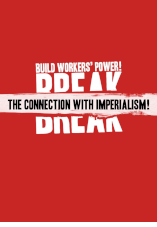 Break the Connection with Imperialism: Documents of the 25th National Congress of the Communist Party of Ireland · €5 (£4.50) |
 Lynda Walker, Living in an Armed Patriarchy: Public Protest, Domestic Acquiescence · €6 (£5) |
 Dónal Donnelly, The Legacy of Peadar O’Donnell · €6 (£5) |
 Capitalism Cannot Solve Its Many Crises: James Connolly Memorial Lecture and Connolly Commemoration, 2020 · Free download of PDF | Íoslódáil den PDF saor in aisce |
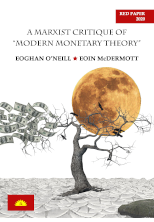 Eoghan O’Neill and Eoin McDermott, A Marxist Critique of “Modern Monetary Theory” · €3.00 (£2.50) |
| From Connolly Books, 43 East Essex Street, Dublin D02 XH96. Ó Connolly Books, Sráid Essex Thoir, Baile Átha Cliath D02 XH96. |
Join the struggle for socialism! Join the CPI. |

|
I would like to join |
|
I would like more information |
Glac páirt sa troid ar son an tsóisialachais! Téigh sa CPI. |
|
|
Ba mhaith liom clárú |
|
Ba mhaith liom tuilleadh eolais |
|
Contact us National office Belfast Galway |
|
Déan teagmháil linn Oifig náisiúnta Béal Feirste Gaillimh |